Home/Urn transfer
Urn transferUrn transfer abroad and to Germany
After a cremation, we bring your loved one’s urn safely to its destination – to the CIS countries, Eastern Europe and worldwide. And we bring urns from abroad to Germany.
Rudolf Nordheimer and team – in German, Russian or English.
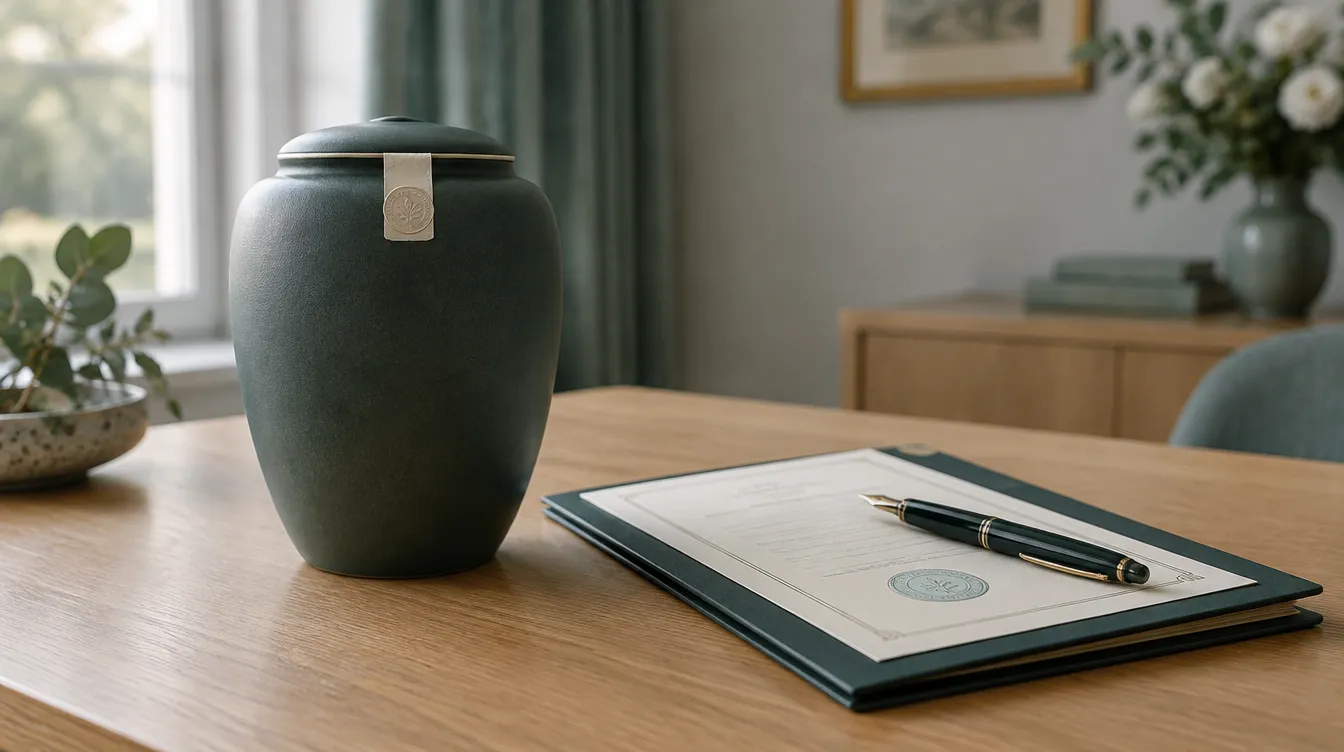
An urn travels more easily – but not without paperwork
After a cremation, there is no need for a transfer coffin with a zinc liner. The urn can travel as air freight or, in many cases, be taken on board the plane by a relative. This makes the transfer simpler and considerably cheaper.
The documents are what matters: the crematorium, authorities, airline and destination country each require their own proof. We put them together for you.
As air freight or in hand luggage?
Whether the urn can be taken on board depends on the federal state, the destination country and the airline. We clarify this in advance.
| As air freight | In hand luggage | |
|---|---|---|
| Who travels | The urn alone, sealed, as air freight | A relative takes it on board the plane |
| Requirements | We handle freight documents, customs and import | Airline rules, hand luggage, security check |
| Documents | Fully prepared by us | Prepared by us, travel with the relative |
| In Germany | The urn stays with the funeral director until departure | Release depends on the federal state – we clarify this |
| Costs | Freight and handling | Often cheaper, plus the relative’s plane ticket |
Urn in hand luggage: what to look out for
If a relative takes the urn with them, these points will help. We are happy to put together the document folder for you.
Sources: Finnair – Travelling with an urn
- Ask the airline beforehandNot every airline allows urns in the cabin. Ideally, get confirmation in writing.
- X-ray-transparent urnWood, cardboard or plastic. Metal or stone can prevent clearance at the security check.
- Keep it sealedThe urn must not be opened at the security check; the seal stays intact.
- Original documentsDeath certificate, cremation certificate, translation and apostille if required.
- Check import rulesSome countries require a permit or a customs declaration.
- Allow extra timeArrive at the airport earlier for the security check.
How an urn transfer works
Initial conversation
We clarify the destination country, the destination and whether the urn travels as freight or with relatives. You then receive a written fixed price.
Cremation and documents
We coordinate with the crematorium, obtain the death certificate and cremation certificate and, depending on the destination country, have them apostilled and translated.
Shipment or handover
The urn travels sealed as air freight – or we hand it over to your relatives before departure with a complete document folder.
Arrival in the destination country
After customs and release, the urn is handed over to your family, a cemetery or a local funeral director. We keep you informed until then.
Which documents are needed for an urn
The exact requirements depend on the federal state and the destination country. These documents are usually required – we obtain them for you.
- Death certificateinternational or multilingual, from the civil registry office
- Cremation certificatefrom the crematorium
- Confirmation of the urn’s contentsfrom the funeral director – ashes only, no hazardous substances
- Proof of the place of burialdepending on the federal state, e.g. confirmation from a cemetery in the destination country
- Apostille or legalisation and translationdepending on the destination country, e.g. for the CIS countries
- Copy of passport or ID cardof the deceased
- Foreign death certificatewith apostille or legalisation
- Cremation certificatefrom the crematorium abroad
- Confirmation of the urn’s contentsfrom the local funeral director
- Passport of the deceased
- Urn certificatefrom the German mission abroad, depending on the country
- Receipt by a funeral directorin Germany, due to mandatory cemetery burial (Friedhofszwang) – we take care of this
Sources: German Mission in South Africa – Urn transfer to Germany (EN) · European Consumer Centre Germany – Death abroad · Finnair – Travelling with an urn
Mandatory cemetery burial in Germany
In Germany, urns must in principle be buried in a cemetery and generally may not be kept privately. Exceptions exist only in individual federal states, such as Bremen.
That is why the crematorium and authorities often require proof of where the urn will be buried abroad. If an urn comes to Germany from abroad, a funeral director receives it – we take care of that.
How much does an urn transfer cost?
Our services start from €850. The exact price depends on the destination country, the mode of transport and the documents, such as apostille and translations.
You receive a written fixed price in advance, listing every item. More about costs
Fixed price for the urn transfer
Tell us where the urn is and where it needs to go. We check the requirements of the destination country and get back to you with a written fixed price.
- Free and without obligation
- Written fixed price, no extra charges later
- Your data stays with us
- Request
- –
- Urgency
- Immediately
- Contact
- Phone call

Your enquiry goes directly to Rudolf Nordheimer. You will receive a written fixed price.
Frequently asked questions
Your question isn’t here? Call us – we will answer right away.
All questionsHow does an urn travel abroad – as freight or in hand luggage?
There are two options. Either the urn travels sealed as air freight, in which case we take care of freight documents, customs and import. Or a relative takes the urn on board the plane; in that case we prepare the documents and they travel with the relative. Whether the urn can be taken on board depends on the federal state, the destination country and the airline. We clarify this in advance.
May I take an urn in my hand luggage?
With many airlines yes, but not with all. Ask the airline beforehand and ideally get the permission confirmed in writing. The urn should be made of an X-ray-transparent material such as wood, cardboard or plastic, as it must not be opened at the security check. The original death certificate and cremation certificate belong in your hand luggage. Allow extra time for the security check.
Which documents does an urn need for travel abroad?
As a rule, the death certificate – often in an international, multilingual version – the crematorium’s cremation certificate and the funeral director’s confirmation of the urn’s contents. Depending on the federal state, proof of where the urn will be buried abroad is required. Many destination countries, for example in the CIS, additionally require an apostille or legalisation and certified translations. We put the documents together for you.
Why is proof of burial abroad required?
Because of mandatory cemetery burial (Friedhofszwang): in Germany, urns must in principle be buried in a cemetery and generally may not be kept privately. Exceptions exist only in individual federal states, such as Bremen. For this reason, the crematorium and authorities often only release an urn for abroad once it is certain where it will be buried – for example with confirmation from a cemetery.
Can you bring an urn from abroad to Germany?
Yes. This usually requires the foreign death certificate with apostille or legalisation, the cremation certificate, the funeral director’s confirmation of the urn’s contents and the deceased’s passport; some German missions abroad also issue an urn certificate. Because of mandatory cemetery burial, a funeral director must receive the urn in Germany – we take care of this and, if you wish, organise the burial.
How much does an urn transfer cost?
With us, an urn transfer starts from €850. The exact price depends on the destination country, the mode of transport and the documents required, such as apostille and translations. After a short conversation, you receive a written fixed price listing every item.
We are here for you now
Day and night, including weekends. One call is all it takes to get the repatriation under way.