Home/Countries/Bulgaria
EuropeRepatriation to Bulgaria and back to Germany
For a repatriation to Bulgaria, the route determines the paperwork: the shortest way leads through Serbia, a non-EU country with its own transit permit. The route via Hungary and Romania stays within the Schengen Area. Together with you, we choose the right route.
Rudolf Nordheimer and team – in German, Russian or English.
Bulgaria at a glance
- Transport route
- Road; Munich–Sofia approx. 1,340 km via Serbia or approx. 1,480 km via Romania; repatriation often by air freight
- Border
- Full Schengen member since 1 January 2025; transit through Serbia with border and customs checks
- Certificates
- No apostille required (EU Regulation 2016/1191); multilingual CIEC certificates
- Agreements
- Berlin Agreement of 1937 does not apply; Germany has not ratified the Council of Europe Agreement of 1973; CIEC Convention No. 16 (since 2013)
- Representation in Germany
- Embassy in Berlin, Consulates General in Düsseldorf, Frankfurt am Main, Munich
From Germany to Bulgaria: route and documents
The shortest road connection from Munich to Sofia runs through Austria, Slovenia, Croatia and Serbia and is around 1,340 kilometres long. Serbia is not part of the EU. For transit with a deceased person, the Republic of Serbia requires a transit escort permit (tranzitna sprovodnica). It is applied for at a Serbian mission, for example the Consulate General in Frankfurt am Main. This requires the same documents as a repatriation to Serbia, plus the permit of the destination country.
The alternative runs via Hungary and Romania and across the Danube bridge Calafat–Vidin into Bulgaria. At around 1,480 kilometres it is longer, but it stays entirely within the Schengen Area. Since 1 January 2025 Bulgaria and Romania have been full members; regular checks at the land borders have been lifted. For destinations on the Black Sea coast such as Varna or Burgas, this route can also make sense in terms of time. We discuss with you which route is best in your case.
Through its missions, the Bulgarian Ministry of Foreign Affairs assists with transferring a coffin or an urn to Bulgaria. The coffin must be accompanied by a death certificate issued by the local authorities. On that basis, the municipality of the last place of residence in Bulgaria later issues the Bulgarian death certificate. The competent missions are the embassy in Berlin and the Consulates General in Düsseldorf, Frankfurt am Main and Munich. We clarify in advance which confirmation the consulate requires in the individual case.
- International death certificateMultilingual CIEC version from the German civil registry office
- Body passportFrom the German local public order office, for transporting the body
- Tranzitna sprovodnicaSerbian transit permit – only when travelling through Serbia
- Coffining and health clearance certificateConfirms that the body was placed in the coffin properly and that there are no health concerns
- Passport or identity cardOf the deceased, for registration in Bulgaria
Death in Bulgaria: repatriation to Germany
If a relative dies in Bulgaria, for example on holiday on the Black Sea in Varna or Burgas, the family engages a Bulgarian funeral director or a German funeral home that coordinates with a local funeral director. The funeral director applies for the death certificate at the civil registry office. The German Embassy in Sofia points out that the international, multilingual certificate must be explicitly requested. Otherwise only a certificate in Bulgarian is issued.
According to the German Embassy in Sofia, the repatriation of a coffin or urn to Germany is carried out by air. Preparation usually takes 3 to 10 days. If the Bulgarian authorities are investigating the death of a foreign national, it can take up to two weeks, and in exceptional cases longer. The embassy therefore advises only arranging the date of the funeral in Germany once the funeral directors have confirmed the transfer details.
As a rule, relatives do not need to travel to Bulgaria themselves for the formalities. First check whether an insurance policy covers the costs. Insurers often work with set funeral directors. Before you place an order, we give you a written fixed price for collection in Bulgaria, the repatriation and the journey to the cemetery in Germany.
- International death certificateFrom the Bulgarian civil registry office; the multilingual version must be explicitly requested
- Medical certificate of deathStating the cause of death
- Release by the authoritiesIf there is an investigation, e.g. after an accident, only once it has been concluded
- Passport of the deceasedFor registration and transport
Good to know: funeral customs and particularities in Bulgaria
Most Bulgarians belong to the Bulgarian Orthodox Church. There is also a Muslim minority. In Orthodox families, the funeral service is followed by memorial days, especially the 40th day after death. Many families put up death notices with a photo on front doors and trees (некролог, nekrolog). If the funeral is to take place on a particular day, let us know early. We plan the journey so that the coffin arrives in good time.
According to Destatis, around 422,000 Bulgarian nationals were living in Germany at the end of 2025. According to the Bulgarian Ministry of Foreign Affairs, the wishes of the deceased come first in deciding the type and place of burial. Without a will, the spouse, adult children, parents or siblings decide. According to the German Embassy, cremation is generally possible in Bulgaria.
Urn transfer to Bulgaria
According to the Bulgarian Ministry of Foreign Affairs, an urn, just like a coffin, can be brought to Bulgaria with the assistance of the Bulgarian mission. It is accompanied by the death certificate and the cremation certificate from the German crematorium. Travelling overland via Romania, the urn stays within the Schengen Area. If the journey passes through Serbia, Serbia also requires an escort permit (sprovodnica) for an urn. For a flight, the airline’s rules apply; we clarify them before booking.
More about urn transferFixed price for repatriation to Bulgaria
Tell us where the deceased is now. We check what Bulgaria requires and send you a written fixed price – free of charge and without obligation.
- Free and without obligation
- Written fixed price, no extra charges later
- Your data stays with us
- Request
- –
- Urgency
- Immediately
- Contact
- Phone call
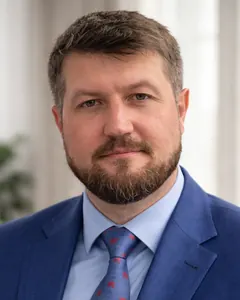
Your enquiry goes directly to Rudolf Nordheimer. You will receive a written fixed price.
Frequently asked questions about Bulgaria
Your question isn’t here? Call us – we will answer right away.
All questionsDoes a repatriation to Bulgaria have to go through Serbia?
No. The route through Serbia is the shortest, but requires a Serbian transit permit (tranzitna sprovodnica) and a border crossing outside the EU. The route via Hungary and Romania is longer, but stays within the Schengen Area. We advise you on which route suits your case.
Which Bulgarian mission in Germany is responsible?
The embassy in Berlin and the Consulates General in Düsseldorf, Frankfurt am Main and Munich, each for certain federal states. There are also honorary consuls, for example in Hamburg, Münster or Stuttgart.
How long does a repatriation from Bulgaria to Germany take?
The German Embassy in Sofia states that preparation usually takes 3 to 10 days. If the authorities are investigating, it can take up to two weeks or longer. So only set the date of the funeral once the arrival has been confirmed.
My relative died on holiday in Bulgaria. Do I have to fly there?
As a rule, no. Local funeral directors handle the formalities. If the deceased lived in Bulgaria and did not settle their estate, a trip may be necessary – in that case the German Embassy in Sofia advises getting in touch.
Does a German death certificate need an apostille for Bulgaria?
No. Between EU member states, no apostille is required for death certificates under EU Regulation 2016/1191. Germany and Bulgaria are also both parties to the CIEC Convention on multilingual certificates. We order the international version from the civil registry office at the same time.
Sources: German Embassy Sofia: Information on the death of German nationals · Bulgarian Ministry of Foreign Affairs: Death abroad · German Federal Foreign Office: Missions of Bulgaria in Germany · Serbian Consulate General Frankfurt: Prenos posmrtnih ostataka (incl. tranzitna sprovodnica) · eucrim: Bulgaria and Romania Fully Join Schengen · CIEC: Convention No. 16, status list · Destatis: Foreign population by citizenship · German Federal Foreign Office: Status list of the 1937 Berlin Agreement on the transport of corpses
Information provided without guarantee, as of 10/2026. Requirements of authorities and airlines change; we check them for each case.
We are here for you now
Day and night, including weekends. One call is all it takes to get the repatriation under way.